
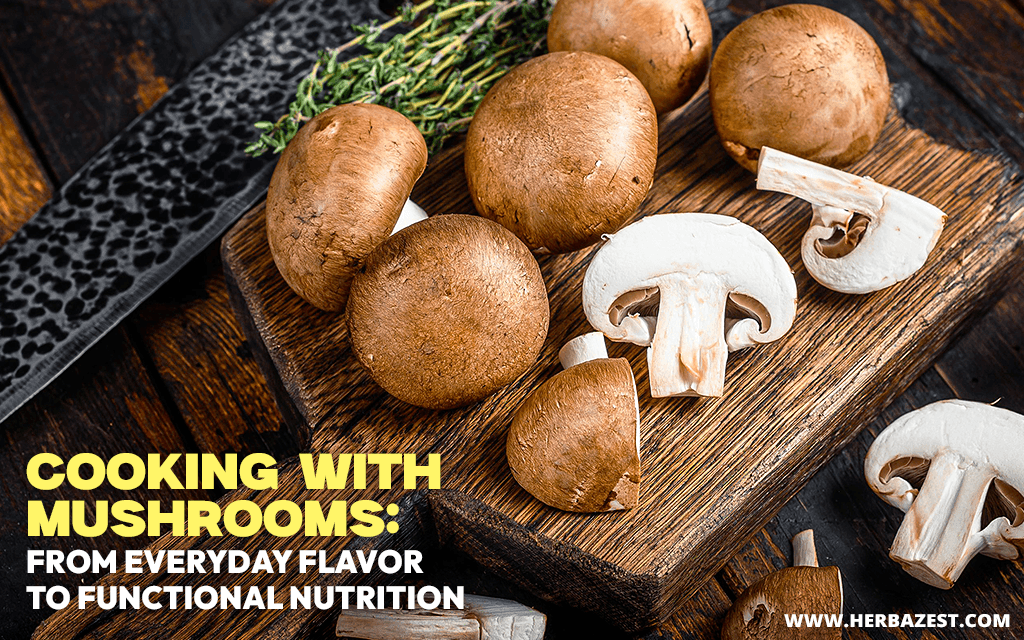
Mushrooms have long been valued for their distinctive flavor and versatility. Today they are also being rediscovered as a functional food that connects the pleasure of eating with the science of nourishment.1 Whether added to a stir-fry, simmered into a broth, or incorporated into sauces, mushrooms can bring depth, texture, and wellness benefits to everyday meals.
Nutritional Value of Mushrooms
Mushrooms belong to their own biological kingdom, fungi, and their nutritional profile reflects this unique classification. They are naturally low in calories and fat but provide an impressive range of vitamins, minerals, and antioxidants.
Most varieties are good sources of B vitamins, such as riboflavin, niacin, and pantothenic acid, which support energy metabolism and contribute to normal nervous system function. Some mushrooms can also produce vitamin D2 when exposed to sunlight or ultraviolet light, making them one of the few plant-based foods that can naturally supply this important vitamin.
Mushrooms also supply valuable minerals, including selenium, copper, and potassium. Selenium and copper help protect cells from oxidative stress, while potassium supports healthy muscle and nerve activity.
Functional Benefits of Mushrooms
The functional qualities of mushrooms come from their combination of nutrients and bioactive compounds.
In addition to their nutrients, mushrooms contain beneficial compounds such as beta-glucans and ergothioneine. Beta-glucans, a type of soluble fiber found in many species, are known for their role in supporting normal immune activity, while ergothioneine is a natural antioxidant that helps protect tissues from everyday cellular stress.
Some varieties contain additional compounds such as terpenoids and phenolic acids, which continue to be studied for potential effects on metabolic balance and cellular resilience.
Most Common Varieties of Mushrooms for Cooking
Several mushroom varieties are widely available and easy to use in daily cooking. Each contributes its own character. Some offer a subtle sweetness, while others provide an earthy depth. They can easily turn simple dishes into satisfying, nutrient-rich meals.
White button mushrooms are mild and quick to prepare. This makes them ideal for sautés and omelets.
Cremini and portobello mushrooms are more mature forms of the same species. They offer a firmer texture and a deeper, more robust flavor that works well for roasting or grilling.
Shiitake mushrooms have a rich aroma and a slightly smoky taste. They are excellent additions to soups, noodles, and broths.
Oyster mushrooms have a delicate flavor and tender texture that pairs nicely with vegetables and grains.
Dried porcini or chanterelles offer an intense earthy note that can elevate risottos and sauces.
Slippery jack mushrooms offer a gently earthy flavor and a silky richness that deepens beautifully during cooking, making them a great addition to soups, stews, and rustic dishes.
How to Add Mushrooms to Everyday Meals
Mushrooms are highly adaptable and can be used in several forms that suit a wide range of recipes.
Fresh Mushrooms
Fresh mushrooms reveal their best qualities when sautéed, grilled, or roasted with a small amount of olive oil, salt, and herbs. Their natural umami flavor enhances almost any savory dish, including scrambled eggs, pasta like these walnut & mushroom spaghetti bolognese, stews like this mushroom stroganoff with thyme, and patties like these mini quinoa mushroom burgers. Fresh mushrooms also work great as meat or fish replacement in international classics like mushroom ceviche and mushroom shawarma.
Pickled or Marinated Mushrooms
Pickled mushrooms, preserved in a tangy vinegar brine, and marinated mushrooms, typically soaked in oil with herbs and aromatics, both bring instant flavor to everyday meals. Their bright, savory notes pair well with salads, sandwiches, grain bowls, and appetizer boards, offering an easy way to elevate quick dishes with minimal effort.
Dried Mushrooms
Dried varieties are useful pantry staples. Before use, they are usually rehydrated by soaking in warm water until tender. The softened mushrooms can then be added to sauces, soups like this dried slippery jack mushroom soup, grain bowls like this creamy risotto with mushrooms, and quick meals like this tofu & dry mushroom stir-fry. The soaking liquid becomes a flavorful stock that deepens the flavor of the dishes.
Mushroom Powder
Using mushroom powder offers convenience and concentrated flavor. A small spoonful of powdered slippery jacks or porcini mushrooms stirred into soups, dressings, sauces, or gravies provides an immediate boost of umami without changing the texture of the recipe. It can also be added to a variety of fillings as flavoring, including this mushroom lentil stromboli.
Cooking with mushrooms reflects the essence of functional nutrition. It allows everyday ingredients to support the body while offering flavor, comfort, and satisfaction. Their adaptability and nutrient density make mushrooms an easy addition to a balanced diet. From morning scrambles to cozy soups, they enrich meals with both nourishment and enjoyment, showing that good food can be wholesome, accessible, and deeply restorative.
Sources
- Colorado State University, Mushrooms, n.d.
- Foods, Mushrooms as Nutritional Powerhouses: A Review of Their Bioactive Compounds, Health Benefits, and Value-Added Products, 2025
- Harvard T.H. Chan - School of Public Health, Mushrooms, n.d.
- Institute of Culinary Education, Mushroom FAQs | 5 Types of Mushrooms Explained, 2025
- Journal of Future Foods, Mushroom-derived nutraceuticals in the 21st century: an appraisal and future perspectives, 2025
- PLOS ONE, Suillin: A mixed-type acetylcholinesterase inhibitor from Suillus luteus which is used by Saraguros indigenous, southern Ecuador, 2022
- University of Illinois, Mushrooms - Preparation, n.d.
- Phytotherapy Research, Edible mushrooms as potential functional foods in amelioration of hypertension, 2023
Footnotes:
- Frontiers in Nutrition. (2022). Mushrooms as future generation healthy foods. Retrieved December 10, 2025, from https://pmc.ncbi.nlm.nih.gov/articles/PMC9763630/