University life often involves sustained mental effort, shifting routines, and periods of heightened academic pressure. Over time, these factors can influence memory performance, emotional well-being, and sleep quality, even in otherwise healthy young adults.1
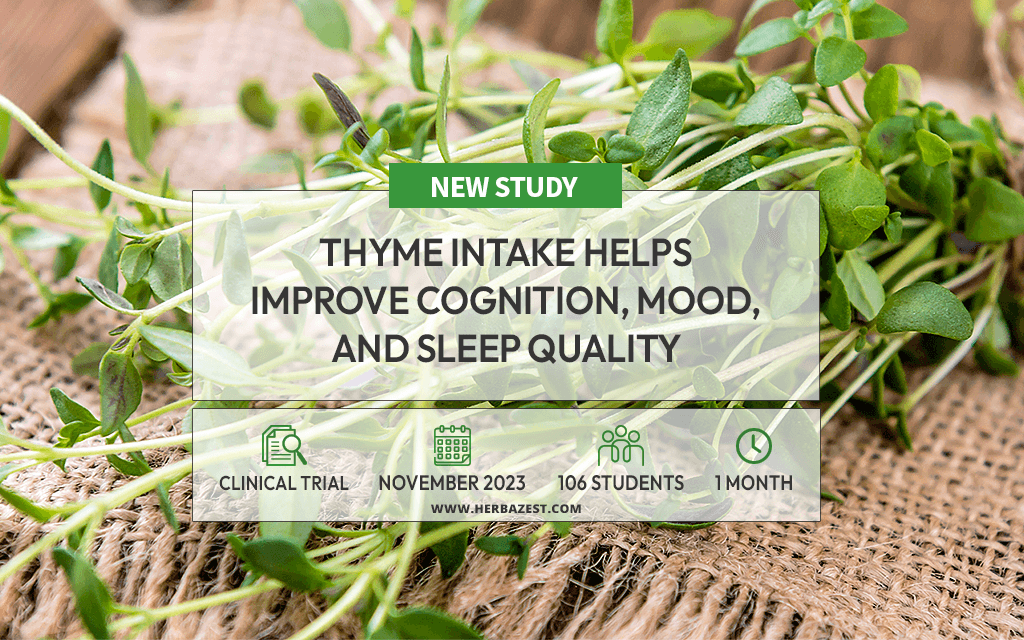
As interest grows in everyday foods that may help support mental and emotional balance, researchers are increasingly looking at familiar culinary plants. Thyme has a long history of traditional use and contains aromatic plant compounds that have drawn scientific interest for their effects on the nervous system. This study examined the effects of thyme on memory, mood, and sleep quality in college students.
The Study
Researchers conducted a clinical trial involving 106 university students aged 19 to 23. Participants were randomly assigned to receive either 500 mg of dried thyme leaves twice daily or a placebo for one month. Memory performance, anxiety, depression, and sleep quality were assessed at the beginning and end of the study using validated questionnaires commonly used in clinical research.
The Results
After one month, students who consumed thyme showed significant improvements in both prospective and retrospective memory, meaning they reported fewer everyday memory lapses.
The thyme group also experienced substantial reductions in anxiety and depression scores compared with the placebo group.
Sleep quality notably improved as well, with lower overall sleep disturbance scores. However, sleep duration and the time it took to fall asleep did not change significantly, suggesting thyme influenced sleep quality rather than sleep quantity.
No side effects were reported, and the placebo group showed no meaningful changes across the measured outcomes.
What Does this Mean?
This study suggests that thyme improves memory, mood, and sleep quality in healthy young adults. The findings are especially notable because thyme is widely used as a food ingredient rather than a pharmaceutical product.
While more research is needed to confirm long-term effects and explore other populations, the results highlight thyme as an example of how traditional culinary plants may contribute to everyday cognitive and emotional well-being, without the risks associated with stimulant use.
Other herbs such as rosemary, sage, and lemon balm have also been studied for similar supportive effects on memory, mood, and sleep.
Sources
- European Review for Medical and Pharmacological Sciences, Effects of orally administered Thymus vulgaris leaves on memory, anxiety, depression, and sleep quality in university students: a randomized controlled trial, 2023
Footnotes:
- Sleep Science. (2018). Quality of Sleep and Depression in College Students: A Systematic Review. Retrieved February 9, 2026, from https://pmc.ncbi.nlm.nih.gov/articles/PMC6361309/