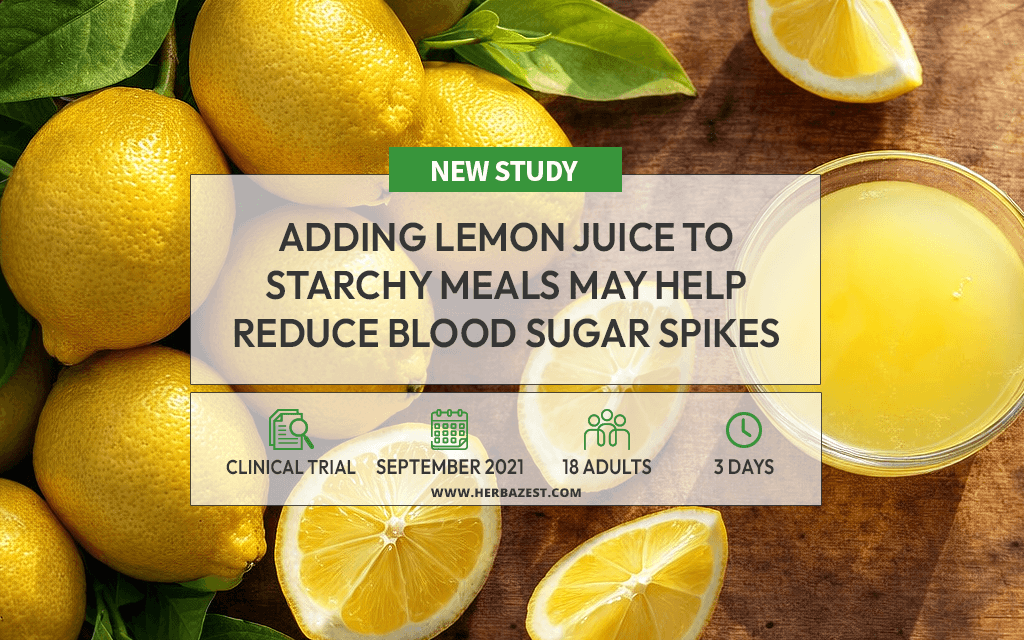
Starchy foods, such as bread, are a major source of energy, but they typically cause sharp rises in blood sugar levels after meals. These rapid spikes can be especially noticeable when starches are eaten on their own. Researchers know that slowing starch digestion helps stabilize blood sugar, and one simple approach is to pair starchy foods with ingredients that naturally slow starch breakdown. This study explored whether drinking lemon juice or black tea with bread could meaningfully change post-meal blood sugar levels in healthy adults.
The Study
Researchers conducted a randomized crossover clinical trial with 18 healthy adults. On three separate mornings, participants ate the same breakfast: 100 g of white bread, accompanied by 250 ml of either water, black tea, or diluted lemon juice. Each participant completed all three conditions on different days.
Capillary blood glucose was measured multiple times over three hours after breakfast. Three hours later, participants were offered an eat-until-comfortably-full lunch to see whether the breakfast pairing affected later appetite and energy intake.
The Results
Black tea had no meaningful effect on blood glucose levels, similar to water.
Lemon juice, however, produced a clear change in post-meal blood sugar response. When bread was consumed with lemon juice, the average peak blood glucose was about 30-33% lower, and the time to reach that peak was delayed by more than 30 minutes (roughly 78 minutes instead of 41). Total glucose exposure over the full three-hour period did not differ significantly, suggesting lemon juice did not prevent carbohydrate absorption, but slowed it down, creating a flatter, more gradual rise.
None of the beverages changed how much participants ate at the next meal.
What Does this Mean?
The results of this clinical trial have shown that adding lemon juice to starchy meals can reduce sharp blood sugar spikes, even in healthy adults. The effect appears to come mainly from lemon's acidity, which temporarily inactivates salivary amylase, an enzyme that begins starch digestion in the mouth and stomach. With starch broken down more slowly, glucose enters the bloodstream at a steadier pace.
In real life, this could be as simple as drinking lemon water with bread, rice, or pasta or adding lemon juice to grains, potatoes, or legumes. While this strategy does not replace balanced meals, it offers an easy, food-based tool to improve the glycemic impact of everyday starch-rich foods, especially relevant for people aiming to support healthy blood sugar control.
Other foods, like pickled cucumbers, cabbage, and onions, have also been linked to a reduced glycemic response when eaten with starchy meals.1,2
Sources
- European Journal of Nutrition, Lemon juice, but not tea, reduces the glycemic response to bread in healthy volunteers: a randomized crossover trial, 2021
Footnotes:
- European Journal of Nutrition. (2005). Vinegar supplementation lowers glucose and insulin responses and increases satiety after a bread meal in healthy subjects. Retrieved January 19, 2026, from https://pubmed.ncbi.nlm.nih.gov/16015276/
- Frontiers in Nutrition. (2022). Culinary strategies to manage glycemic response in people with type 2 diabetes: A narrative review. Retrieved January 19, 2026, from https://www.frontiersin.org/journals/nutrition/articles/10.3389/fnut.2022.1025993