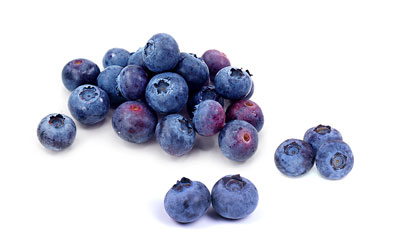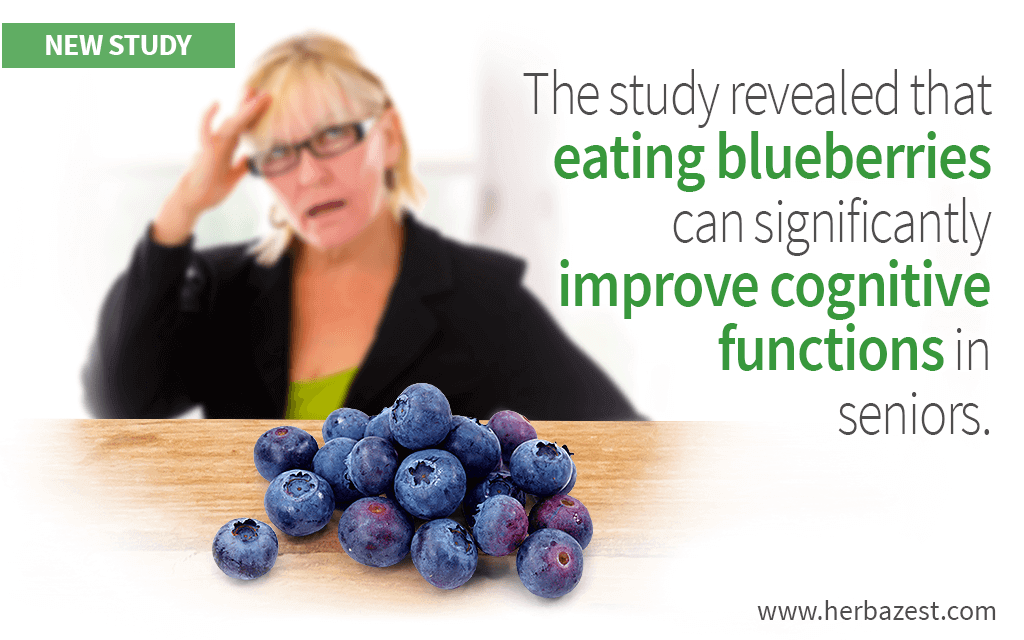
A research team at the University of Cincinnati Academic Health Center, led by Robert Krikorian, PhD, conducted two human studies to follow up on earlier clinical trials that have shown the positive effect of blueberries on the human brain, particularly improving memory in older people. What they have found corroborates and reinforces those previous studies, putting science one step closer to effectively fighting Alzheimer's disease, which currently affects an estimated of 6.9 million people in the U.S. alone.1
The Studies
One of the studies showed significant improvement in cognitive functions among 47 adults aged 68 and older who previously had mild cognitive impairment, a risk factor for Alzheimer's disease. They were given daily doses of either freeze-dried blueberry powder (comparable to a cup of berries) or a placebo powder.
The subsequent study was conducted on 94 people, from 62 - 80 years old, divided into four subgroups. None of them had full-blown Alzheimer's, but they felt their cognitive functions were deteriorating. The groups received blueberry powder, fish oil, fish oil with blueberry powder, or placebo.
This research was presented at the 251st National Meeting & Exposition of the American Chemical Society (ACS).
The Results
In the first study, the results were noticeable after 16 weeks. Krikorian says, "The blueberry group demonstrated improved memory and access to words and concepts." The subjects were also submitted to a functional magnetic resonance imaging (fMRI) examination. The differences between the group that was given the placebo and the group that ingested the blueberry powder were outstanding.
The results of the second study weren't as strong as those of the first one. Those who received blueberry powder or fish oil experienced a small memory improvement, but the fMRI results weren't remarkable for the ones who got the blueberry powder. Krikorian theorizes that these results are due to the minor cognitive issues of the study group.
What Does This Mean?
Although the results are inconclusive, they suggest that blueberry consumption may be particularly effective for individuals with cognitive impairment. However, the benefits appear to be less pronounced in those with milder memory issues or no cognitive deficits.
However, as the results were promising, the team is planning to conduct further studies in younger people, 50 - 65 years old, and those who have additional health issues, such as obesity, high blood pressure, or high cholesterol, to determine whether blueberries could be of use in precluding signs of Alzheimer's.
Other foods and herbs known for their cognitive benefits are hazelnuts, ginkgo, gotu kola, rosemary, and walnuts.
Sources
- American Chemical Society, 251st National Meeting & Exposition
Footnotes
- Alzheimer's & Dementia. (2024). 2024 Alzheimer's disease facts and figures. Retrieved July 8, 2025, from: https://pubmed.ncbi.nlm.nih.gov/38689398/