Metabolic dysfunction-associated steatotic liver disease (MASLD), formerly called NAFLD, is now the most common chronic liver disease in Western countries. Affecting roughly one in three adults, it is closely linked to obesity, insulin resistance, and metabolic syndrome.1 Weight loss is the main treatment, but scientists are studying whether specific foods can directly benefit liver health.
Oranges are rich in flavonoids such as hesperidin and naringenin, found mainly in the fruit's white albedo and membranes. These compounds have antioxidant and anti-inflammatory properties and may help regulate fat metabolism. Previous studies suggested some benefits, but it was unclear whether eating whole oranges could improve liver health independently of weight changes.
The Study
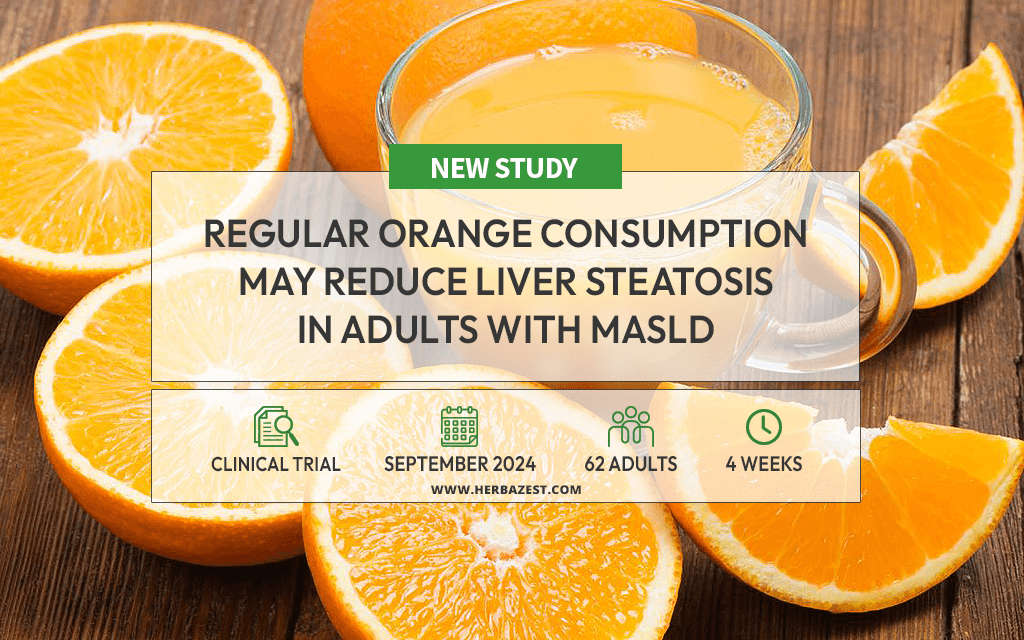
A team of Italian researchers set out to examine whether eating whole oranges could help adults with MASLD improve their liver health. Sixty-two men and women aged 30 to 65 with confirmed liver steatosis (fatty liver) were recruited. Participants were randomly assigned to one of two groups: one consumed 400 grams of whole oranges daily (about four fruits), while the control group consumed an equal amount of non-citrus fruits. The trial lasted four weeks.
At the beginning and end of the study, participants underwent medical evaluations, blood tests, and non-invasive imaging that measures fat and stiffness in the liver.
The Results
After just four weeks, the orange group showed a significant improvement. The prevalence of liver steatosis dropped from 100% at baseline to 70.9% after the intervention, while no improvement was seen in the control group. This represents a 30% reduction in the presence of fatty liver.
Interestingly, these benefits were achieved without changes in body weight, waist size, or body composition. Other markers such as cholesterol, blood sugar, and inflammatory proteins remained stable.
However, the orange group did show a decrease in gamma-glutamyl transferase (GGT), an enzyme linked to liver stress. Additionally, dietary analysis confirmed higher intakes of vitamin C, vitamin A, thiamine, and riboflavin among those eating oranges.
What Does this Mean?
This trial suggests that whole oranges may help reduce liver fat in adults with MASLD, even without weight loss or major lifestyle changes. The benefit likely comes from a combination of vitamins, fiber, and plant compounds unique to citrus fruits.
While longer studies are needed to confirm these effects and explore whether fibrosis can also be improved, the results are promising for people with MASLD looking for natural dietary support.
Other polyphenol-rich foods, such as pomegranates, grapes, and blueberries, may offer similar benefits for liver health.
Sources
- Nutrients, Daily Orange Consumption Reduces Hepatic Steatosis Prevalence in Patients with Metabolic Dysfunction-Associated Steatotic Liver Disease: Exploratory Outcomes of a Randomized Clinical Trial, 2024
Footnotes:
- JAMA Network Open. (2025). Estimated Burden of Metabolic Dysfunction-Associated Steatotic Liver Disease in Us Adults, 2020 to 2050. Retrieved September 16, 2025, from https://pmc.ncbi.nlm.nih.gov/articles/PMC11742522/