Sugar has long been at the center of modern health concerns, linked to weight gain, type 2 diabetes, and heart disease.1 In response, many people have turned to alternative sweeteners as a way to enjoy sweetness without the calories. Among them, stevia stands out for being plant-based and having zero-calorie content. But stevia's role in health goes beyond being a sugar substitute. Scientists have been asking whether stevia can also influence blood sugar control, a critical factor for metabolic health.
The Study
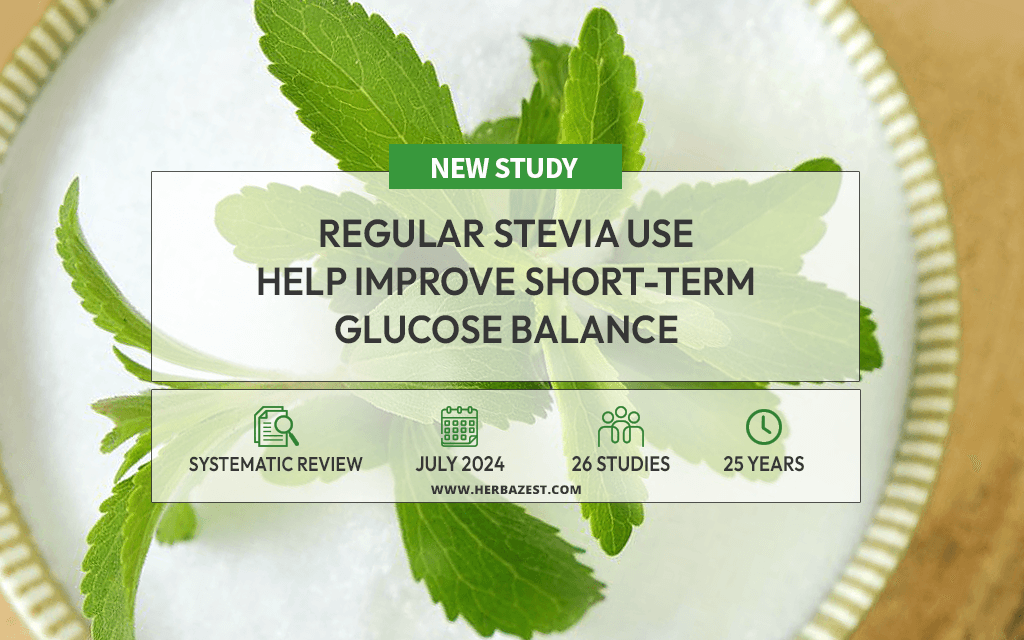
To explore these potential benefits, researchers carried out a systematic review and meta-analysis, bringing together data from 26 clinical studies and over 1,400 participants. The goal was to assess how stevia consumption affects blood glucose, insulin, and HbA1C, a marker of long-term blood sugar control. The participants varied widely, from healthy adults to individuals with diabetes, hypertension, or higher body weight, making the findings more applicable to real-world populations.
The Results
The analysis revealed that stevia intake was associated with a modest but significant reduction in blood glucose levels. This effect was strongest in people with existing metabolic risks such as diabetes or obesity. The data suggest that consuming stevia for one to four months can make a measurable difference, especially at daily intakes above 3,300 milligrams.
Interestingly, the research showed that stevia did not significantly alter insulin levels or HbA1C. This means its benefits are most noticeable in short-term blood sugar regulation rather than in long-term metabolic markers. In other words, while stevia can help reduce immediate spikes in glucose, it may not yet be a substitute for other long-term strategies in managing diabetes.
What Does this Mean?
The results of this 2024 stevia study suggest that replacing sugar with stevia may not only reduce calorie intake but also help smooth out blood sugar fluctuations, especially if used consistently. While the evidence that stevia is good for blood sugar regulation is still limited, most studies point toward the same result. Stevia is more than just an “empty” sweetener.
From a practical standpoint, adding stevia to coffee, tea, smoothies, or desserts could support healthier glucose control, particularly for those at higher risk of blood sugar issues. However, the benefits appear time-sensitive, working best when stevia is consumed daily for a few months.
While future studies will need to clarify its long-term effects and ideal dosages, for now, stevia offers a natural, calorie-free option that fits well into a balanced lifestyle.
Other herbs such as oats, flax, and walnuts also support healthy blood sugar management and complement stevia in a wholesome diet.
Sources
- Diabetes & Metabolic Syndrome: Clinical Research & Reviews, Effect of stevia on blood glucose and HbA1C: A meta-analysis, 2024
Footnotes:
- Critical Reviews in Clinical Laboratory Sciences. (2016). Sugar consumption, metabolic disease and obesity: The state of the controversy. Retrieved August 21, 2025, from https://pubmed.ncbi.nlm.nih.gov/26376619/