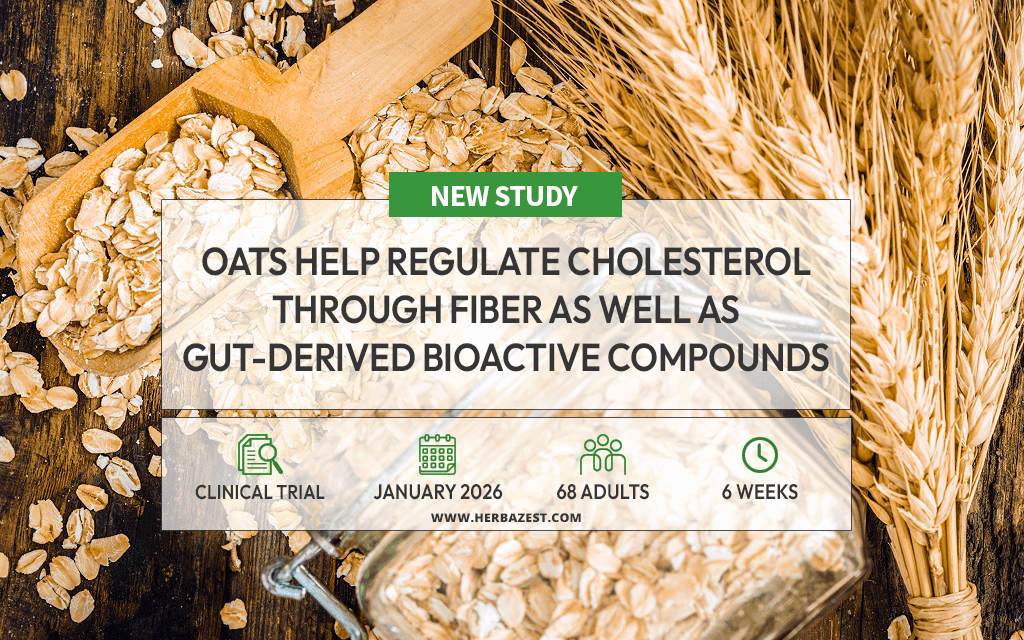
Oats have long been associated with heart health, especially for their ability to help lower cholesterol.1 While beta-glucan fiber is often credited for this effect, scientists have suspected that oats may work through additional, less visible pathways. In particular, growing evidence points to the gut microbiome as a key partner in how whole grains influence metabolism. In a newly published clinical study, researchers investigated how oats interact with gut microbes and whether microbial byproducts help explain oats' cholesterol-lowering effects, particularly in people with metabolic syndrome.
The Study
Researchers conducted two randomized controlled dietary interventions in 68 adults with metabolic syndrome. One group followed a short-term, high-dose oat diet for two days, replacing all meals with oat-based meals. Another group consumed a moderate amount of oats daily for six weeks by replacing one habitual meal. Each intervention was compared with a matched control diet without oats.
Blood, stool, and metabolic markers were measured before and after each intervention. In addition to standard cholesterol markers, researchers analyzed gut microbiota composition and hundreds of circulating metabolites, focusing on phenolic compounds derived from oats and modified by gut bacteria.
The Results
Both oat diets increased blood levels of ferulic acid, a natural phenolic compound found in oats. The short-term, high-dose oat diet led to an additional rise in dihydroferulic acid, a metabolite produced when gut microbes break down ferulic acid.
Only the high-dose, short-term oat diet produced a significant reduction in total and LDL cholesterol, with decreases observed after just two days. The reductions in cholesterol closely matched the increases in phenolic compounds produced by gut microbes, and this connection was stronger than the effect of fiber by itself.
Advanced analyses showed that these phenolic metabolites explained a meaningful portion of cholesterol reduction. Laboratory experiments further confirmed that dihydroferulic acid directly influenced cholesterol handling in human cells, supporting a biological mechanism beyond digestion.
What Does this Mean?
This 2026 oats study suggests that oats lower cholesterol not only through fiber, but also through bioactive compounds transformed by gut microbes, which appear to play an active role in cholesterol metabolism.
The findings also highlight that dose and dietary context matter. Short, focused periods of higher oat intake may produce stronger metabolic effects than smaller daily additions, especially in individuals with metabolic challenges.
Other foods linked to cholesterol support include barley, rye, apples, and blueberries, which share similar fiber and phenolic profiles.
Sources
- Nature Communications, Cholesterol-lowering effects of oats induced by microbially produced phenolic metabolites in metabolic syndrome: a randomized controlled trial, 2026
Footnotes:
- European Journal of Nutrition. (2022). Effect of oat supplementation interventions on cardiovascular disease risk markers: a systematic review and meta-analysis of randomized controlled trials. Retrieved February 3, 2026, from https://pmc.ncbi.nlm.nih.gov/articles/PMC9106631/