Plastic waste has become one of the world's fastest-growing environmental concerns. Conventional plastics are typically made from fossil fuel-derived materials that can persist in the environment for decades, especially when improperly discarded.1 Researchers are increasingly searching for biodegradable alternatives that could reduce pollution while still protecting food effectively. One promising area of investigation involves turning agricultural by-products into sustainable packaging materials instead of treating them as waste. A recent study explored whether starch extracted from lucuma seeds could help meet that need.
The Study
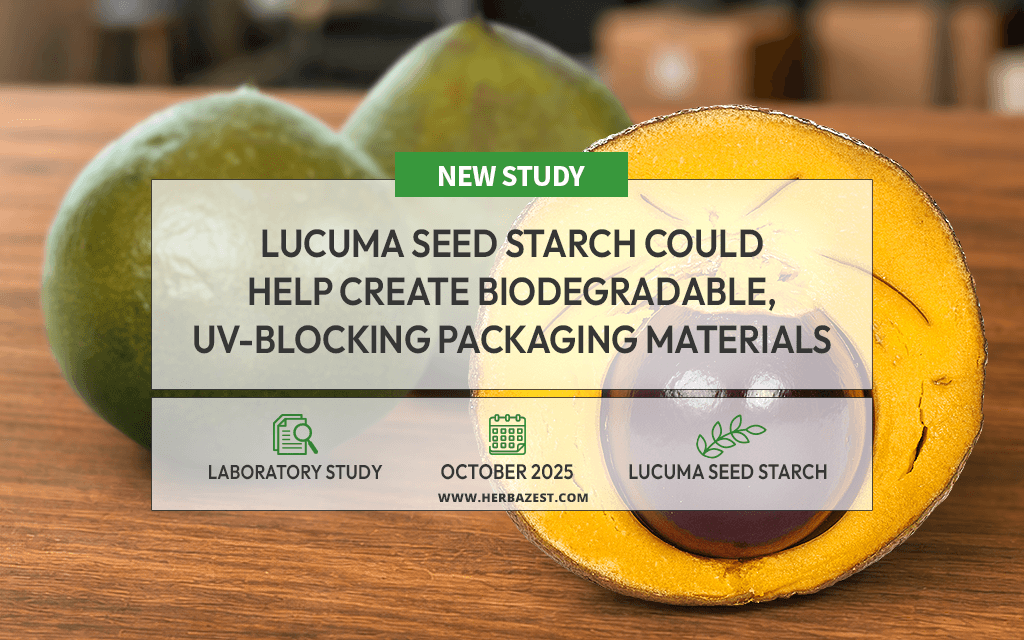
The researchers extracted starch from lucuma seeds obtained from agro-industrial processing in Peru and evaluated whether it could be used to create biodegradable films as an alternative to conventional plastic packaging.
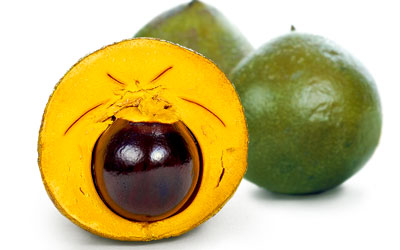
Lucuma seeds can represent up to 13% of the fruit's weight and are commonly discarded. Yet they contain remarkably high amounts of starch, making them a promising raw material for sustainable packaging materials.
To better understand the starch's properties, the researchers analyzed its structure, flexibility, water absorption, thermal stability, and mechanical behavior. They then produced biodegradable films using two manufacturing methods: solvent casting and industrial-style extrusion.
The Results
The extruded lucuma starch films performed especially well. Researchers found that these films were stronger, more flexible, and provided better protection against ultraviolet light than the films produced with traditional casting methods.
This UV-blocking ability is particularly important for foods that degrade when exposed to light, such as oils, dairy products, and certain nutrient-rich foods. The films also showed lower water vapor permeability, meaning they could help reduce unwanted moisture transfer and potentially support longer shelf life.
Interestingly, despite their protective properties, the films still maintained enough transparency for labels or products to remain visible through the packaging.
What Does this Mean?
The study has found that lucuma seed starch showed potential for creating biodegradable packaging materials. The findings are especially interesting because the films developed in the study were not only biodegradable, but also capable of blocking ultraviolet light and reducing moisture transfer.
In practical terms, this means that a part of the fruit that is normally discarded could someday help replace certain petroleum-based plastics used in food packaging.This could support a more sustainable food system by reducing both plastic waste and agro-industrial waste at the same time.
Other plants such as mango, avocado, and potato have also been investigated as possible sources for biodegradable packaging materials.
Sources
- SSRN, Exploring Pouteria lucuma seed starch as a novel biopolymer for film production via casting and extrusion, 2025
Footnotes:
Science Advances. (2017). Production, use, and fate of all plastics ever made. Retrieved May 27, 2026, from https://pubmed.ncbi.nlm.nih.gov/28776036/