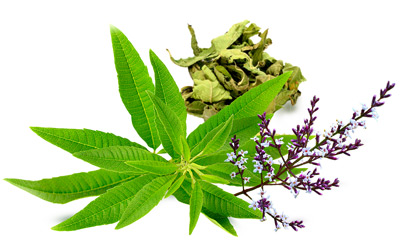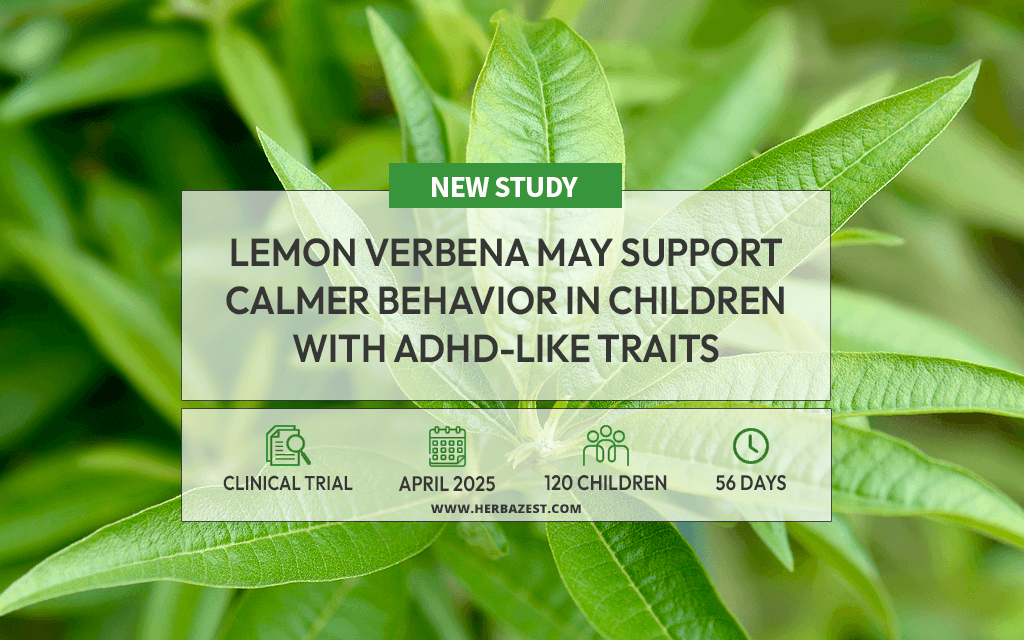
Many children show attention and impulse control challenges that fall below the threshold for an ADHD diagnosis. Families in this situation often have limited support options since formal treatments are usually reserved for diagnosed cases and can be costly or difficult to sustain. Lemon verbena, a plant traditionally used for calming purposes, could potentially be a worthwhile solution.1 In this 2025 clinical trial, researchers wanted to see whether a standardized lemon verbena extract could benefit children with subclinical ADHD.
The Study
This exploratory trial used a randomized, double-blind, placebo-controlled design. A total of 120 participants ages 8 to 17 completed the analysis. All were generally healthy but had elevated scores on a parent questionnaire that tracks behaviors related to inattention and hyperactivity or impulsivity.
Participants received either lemon verbena extract or a matched placebo for 56 days. The dose was weight-based at about 15 mg per kilogram per day, taken before breakfast. Researchers assessed mood, stress, and behavior at multiple points during the study, and parents regularly reported observations at home. The study also included computerized cognitive tasks that measured attention, response control, and accuracy.
The Results
Compared with placebo, children who received lemon verbena extract reported higher fatigue or lower energy on a standardized mood scale across the intervention. Importantly, this shift in perceived energy did not come with consistent declines in cognitive performance.
By day 56, depression-related mood scores were lower in the lemon verbena group than in the placebo group, although this difference was described as a trend rather than a clear statistical separation. Parent ratings of hyperactive or impulsive behavior also moved in a favorable direction, with fewer concerns reported in the lemon verbena group.
In additional exploratory analyses focused on the final study visit, researchers observed further signals of benefit, including lower tension or anxiety ratings and small improvements on certain accuracy measures in attention-related tasks.
What Does this Mean?
When interpreting this study, it is important to keep in mind that the results did not show that lemon verbena treats ADHD. It does, however, suggest that in children with ADHD-like traits, lemon verbena may promote better mood and calmer behavior, without affecting cognitive performance.
The findings are especially interesting because they point to effects that may matter in daily life, such as emotional tone and behavioral intensity, even in children without a formal ADHD diagnosis. Larger studies would help confirm which effects are most reliable, and in which age groups.
Other herbs studied for similar calming and mood-supporting effects include lemon balm, saffron, chamomile, and passion flower.
Sources
- Journal of Psychopharmacology, Daily supplementation with lemon verbena extract decreases subjective energy and parental reports of hyperactivity in children displaying sub-clinical attention deficit hyperactivity disorder-type behaviours: A randomised controlled trial, 2025
Footnotes:
- Plants (Basel). Antioxidant and Antiproliferation Activities of Lemon Verbena (Aloysia citrodora): An In vitro and In Vivo Study. Retrieved February 11, 2026, from https://pmc.ncbi.nlm.nih.gov/articles/PMC8951487/