
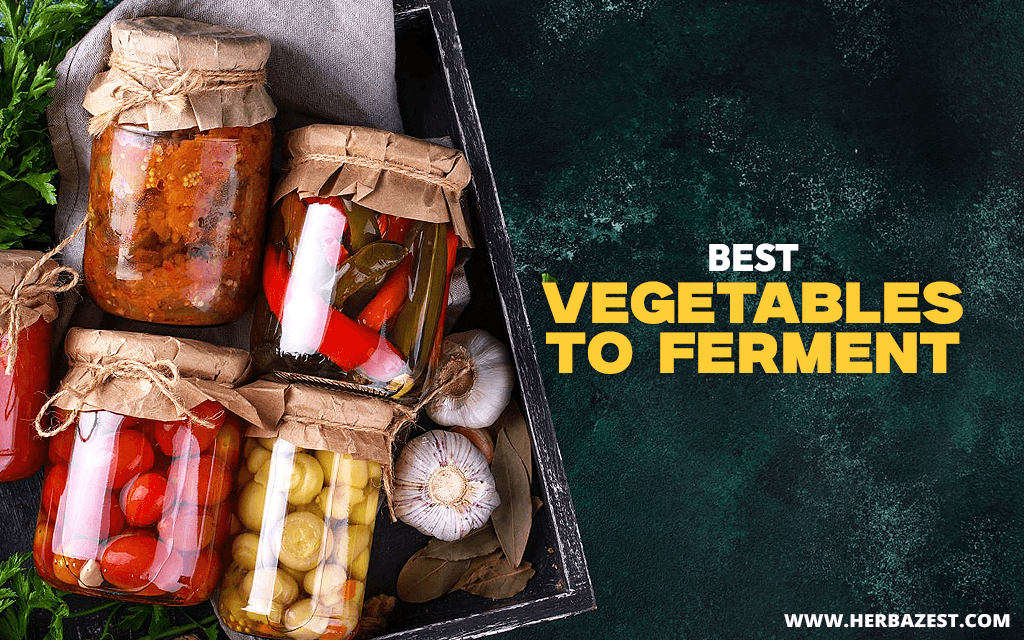
What happens when you leave vegetables in salt and walk away? Over the next few days, they begin to change. Flavors sharpen, textures shift, and acidity builds naturally. This transformation happens through fermentation, a natural process that turns fresh vegetables into stable, flavorful foods using time and the microbes already present on their surface.
What is Fermentation?
Fermentation is a natural process in which lactic acid bacteria convert sugars in foods, often vegetables, into organic acids. As acidity increases, spoilage organisms are suppressed, and the food develops a tangy, savory flavor while remaining stable under refrigeration.
Unlike vinegar pickling or canning, fermentation relies on microbial activity rather than added acid and does not use heat, helping vegetables retain their structure and character.
Vegetable Fermentation Methods
Two methods are commonly used for fermenting vegetables. Both are effective, and the choice depends on the vegetable and how it is prepared.
Brine fermentation requires vegetables to be submerged in a saltwater solution. It is best for whole or chunky vegetables such as cucumbers, green beans, and cauliflower.
Dry salting consists of salt being mixed directly into vegetables, drawing out their natural juices to form a brine. It is best for shredded or thinly sliced vegetables like cabbage and carrots.
What Makes a Vegetable Ferment Well
Vegetables ferment best when they have certain characteristics, including a firm texture that holds up over time, enough natural sugars to support fermentation, sufficient moisture or the ability to release it, and fresh, undamaged surfaces.
Good fermentation also depends on a few simple rules:
- Use clean, fresh vegetables
- Measure salt accurately (typically 2-3% by weight)
- Keep vegetables fully submerged
- Ferment at room temperature, then refrigerate
- Discard any batch with fuzzy mold or unpleasant odors
Easiest Vegetables to Ferment
Some vegetables are especially easy to ferment, producing consistent results even for first-time fermenters.1,2,3
1) Cabbage
Cabbage is a classic fermentation vegetable for good reason. It is sturdy, naturally juicy, and ferments evenly when shredded. It also tolerates longer fermentation without losing structure.
Best form: thin shreds (sauerkraut-style)
Practical tip: aim for roughly 2.25%-2.5% salt by weight
Typical time: 1 to 4 weeks
2) Cucumbers
Cucumbers ferment best when kept crisp and fully submerged. Smaller cucumbers tend to hold their texture better.
Best form: whole small cucumbers or spears
Practical tip: use very fresh cucumbers and trim blossom ends
Typical time: 4 to 10 days for mild sourness
3) Carrots
Carrots are one of the easiest crunchy ferments, with enough natural sweetness to kickstart fermentation.
Best form: sticks, coins, or shredded
Practical tip: carrot sticks often benefit from slightly higher salt
Typical time: 5 to 14 days
4) Radishes and Turnips
Both radishes and turnips ferment quickly and develop a pleasantly sharp, savory profile while keeping their bite.
Best form: thin slices, matchsticks, or cubes
Practical tip: slice thinner for faster souring, thicker for crunch
Typical time: 4 to 10 days
5) Beets
Beets bring earthy sweetness and dramatic color. The brine itself is often reused in dressings and marinades.
Best form: thin slices or small cubes
Practical tip: keep pieces small for even fermentation
Typical time: 7 to 21 days
6) Cauliflower
Cauliflower makes a satisfying ferment when kept very clean, well-salted, and fully submerged.
Best form: small florets
Practical tip: cut florets evenly so they ferment at the same pace
Typical time: 7 to 21 days
Fermentation is less about precision and more about paying attention. With simple ingredients, salt, and time, vegetables change in steady, predictable ways. When approached gradually, fermentation becomes a natural part of everyday kitchen routines, making it easy to keep up with and enjoy.
Sources
- Applied Research, The Role of Lactic Fermentation in Ensuring the Safety and Extending the Shelf Life of African Indigenous Vegetables and Its Economic Potential, 2024
- Foods, Fermentation of Fruits and Vegetables: Bridging Traditional Wisdom and Modern Science for Food Preservation and Nutritional Value Improvements, 2025
- University of California, Sauerkraut, 2020
- University of Illinois, Fermenting Foods, 2020
- USDA Agricultural Research Center, Fermented and Acidified Vegetables, 2013
- Virginia State University, Vegetable Fermentation, 2025
Footnotes:
- NC State University. (n.d.). Safe Plates for Home Food Preservation: Fermentation. Retrieved January 27, 2026, from https://www.ces.ncsu.edu/wp-content/uploads/2019/09/SPHFP_Fermentation_09.19.pdf?fwd=no
- Virginia State University. (2025). Vegetable Fermentation. Retrieved January 27, 2026, from https://www.pubs.ext.vt.edu/content/dam/pubs_ext_vt_edu/FST/fst-328/FST-328.pdf
- UMass Chan Medical School (2022). Make Your Own Fermented Vegetables. Retrieved January 27, 2026, from https://www.umassmed.edu/nutrition/blog/blog-posts/2022/7/make-your-own-fermented-vegetables/