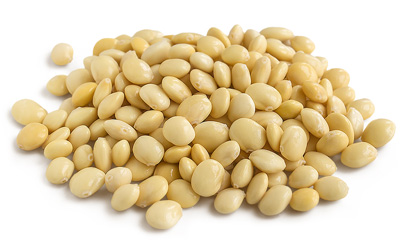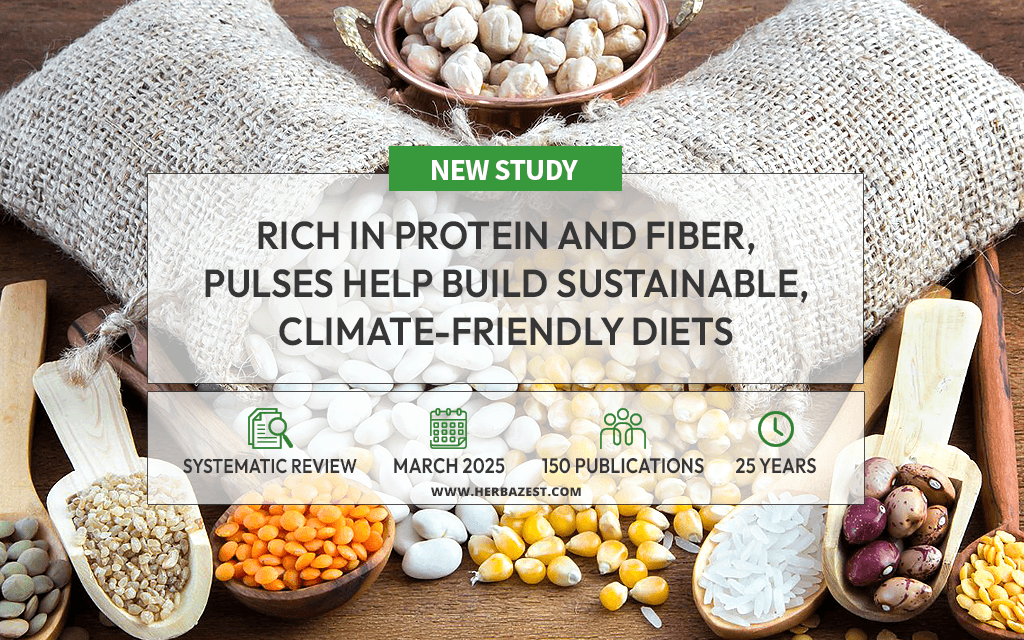
Across the globe, pulses such as lentils, chickpeas, peas, and beans have long been valued as everyday staples. They are rich in protein, fiber, vitamins, and minerals, while also offering environmental benefits through their ability to enrich the soil.1 As the world's population grows and the demand for sustainable diets increases, pulses could be the key to healthier diets and more climate-friendly food systems.
The Study
This scientific review was conducted by a team of researchers from the University of Sydney. It included more than 150 publications spanning the past 25 years. Their goal was to gain a better understanding of how pulses are grown, what nutrients they provide, and how their proteins behave in food systems. The review covered worldwide production trends, the nutritional composition of different pulses, modern protein extraction techniques, and the many ways pulse proteins are being used in food products such as bakery items, dairy alternatives, and meat substitutes.
The Results
The review confirmed that pulses are rich in nutrition and versatile in use. Most pulses contain 15 to 30% protein, and some, like lupins, reach over 40%. Alongside protein, they provide fiber, vitamins, minerals, and other compounds linked to long-term health.
What makes pulses especially valuable is the way their proteins behave in food. They dissolve well in liquids, help oil and water mix, trap air for fluffy textures, and form gels that create firmness. These traits allow them to work in products ranging from drinks and baked goods to dairy alternatives and plant-based meats.
The researchers also showed that simple processing, such as soaking, sprouting, fermenting, or cooking, makes pulses easier to digest while reducing strong flavors and natural compounds that can limit nutrient absorption.
Finally, pulses become even more powerful when paired with grains. While they are high in lysine but lower in methionine, cereals offer the opposite profile. Together, they provide a complete set of essential amino acids, making pulse-grain combinations a strong alternative to animal protein.
What Does this Mean?
The findings of this scientific review show that eating more pulses is a practical way to boost nutrition while supporting sustainability. Adding lentils, chickpeas, and peas to soups, salads, pasta, and other dishes are easy steps with big benefits. Combining pulses with grains like wheat, rye, barley, or corn creates balanced meals that provide all the essential amino acids the body needs.
Additionally, the review also showed that using pulse proteins helps manufacturers make foods that are healthy, tasty, and sustainable, positioning pulses as key ingredients for the future.
Sources
- Foods, Pulse Proteins: Processing, Nutrition, and Functionality in Foods, 2025
Footnotes:
- Food and Agriculture Organization of the United Nations. (2024). Pulses and soils: A dynamic duo. September 23, 2025, from https://www.fao.org/newsroom/story/Pulses-and-soils-a-dynamic-duo/en