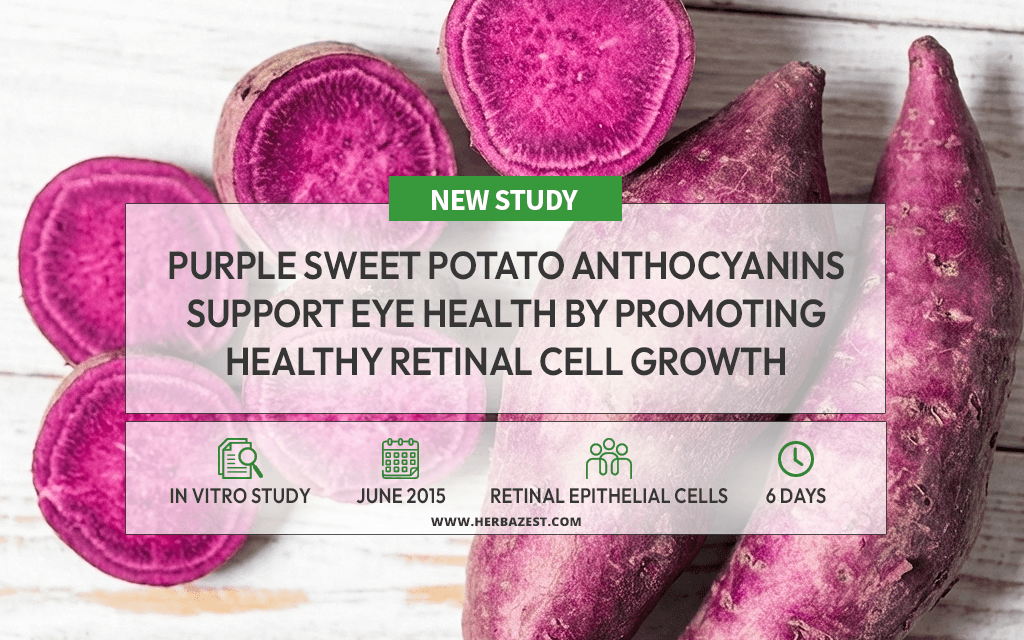
Anthocyanins, the natural pigments that give many fruits and vegetables their deep purple or red color, are known for their antioxidant activity and potential benefits for the eyes. Purple sweet potatoes are especially rich in a unique group of these compounds called purple sweet potato anthocyanins. Since retinal pigment epithelial (RPE) cells are essential for nourishing and protecting the light-sensing cells in the eye, researchers explored whether these anthocyanins could help support their health and growth.
The Study
Researchers used a human RPE cell line and exposed the cells to different concentrations of purple sweet potato anthocyanins to see how they responded. They measured cell survival, growth, and division, and checked whether the compounds changed the cells' normal shape. They also looked for activation of two common pathways involved in cell survival to understand how purple sweet potato anthocyanins might exert their effects.
The Results
At moderate concentrations, purple sweet potato anthocyanins supported healthy cell activity, helping the retinal cells grow and divide normally. Higher experimental doses did not offer additional benefits and were only used to test the limits of the model.
Importantly, the treated cells kept their normal appearance and structure. They remained well-organized, showed healthy connections with neighboring cells, and maintained key features typical of RPE cells.
Purple sweet potato anthocyanins also increased overall cell viability and encouraged more cells to enter the DNA-synthesis stage of the cell cycle, the step required before a cell divides. A higher number of cells also expressed Ki67, a marker of active growth. These findings together indicate that the compounds supported both cell survival and healthy cell division.
The researchers did not detect activation of the Akt or ERK pathways, suggesting that purple sweet potato anthocyanins may work through other mechanisms to promote cell health.
What Does this Mean?
These results show that purple sweet potato anthocyanins can support eye health by promoting the growth and resilience of retinal support cells in a lab setting. Keeping RPE cells healthy is essential for long-term vision maintenance, so these findings open the door for future research in humans.
Other anthocyanin-rich foods, such as blueberries, blackcurrants, and purple corn, have shown similar protective effects on eye-related cells, reinforcing the potential value of these colorful plant compounds in everyday nutrition.
Sources
- Food & Nutrition Research, The influence of purple sweet potato anthocyanin on the growth characteristics of human retinal pigment epithelial cells, 2015
Footnotes:
- Food & Nutrition Research. (2017). Anthocyanidins and anthocyanins: colored pigments as food, pharmecutical ingredients, and the potential health benefits. Retrieved November 25, 2025, from https://pmc.ncbi.nlm.nih.gov/articles/PMC5613902/