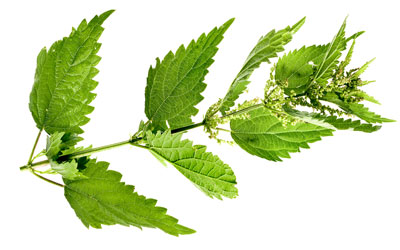
Allergic rhinitis affects over 400 million people worldwide and is more than just a seasonal inconvenience – it disrupts daily life.1 While common medications like antihistamines and nasal steroids offer some relief, they can come with side effects like drowsiness or long-term health risks. This has sparked growing interest in plant-based alternatives, especially stinging nettle, an herb long used in traditional medicine but still not fully understood by science.
The Study
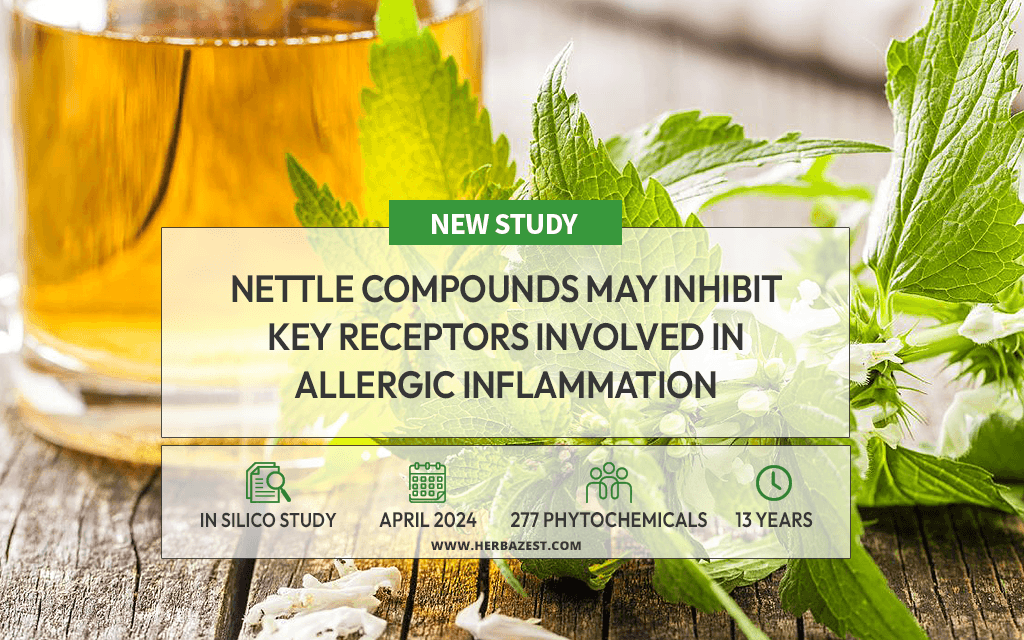
Researchers wanted to uncover how stinging nettle works on a molecular level. They focused on five key cellular receptors that contribute to allergic rhinitis symptoms, including histamine and bradykinin receptors, which play major roles in inflammation and nerve activation. Using advanced computer simulations, they tested how 277 compounds found in stinging nettle interact with these receptors. The goal was to find out whether any of these natural compounds could block the inflammatory responses that make allergies so miserable.
The Results
Out of all the compounds tested, four stood out, particularly alpha-tocotrienol. This vitamin E variant showed strong binding affinity across all five allergy-related receptors, even outperforming many existing drugs in the simulation. Alpha-tocotrienol not only attached securely to the receptors, but it also triggered the kinds of structural changes seen with effective allergy medications. In simpler terms, it seemed to "turn off" the signals that cause inflammation, itching, and congestion.
What Does this Mean?
This study sheds new light on how stinging nettle might help manage allergic rhinitis, not just as a folk remedy, but as a scientifically credible option. Alpha-tocotrienol showed strong potential to block multiple allergy-related pathways, which is something most conventional drugs do not do. Its ability to target several receptors at once suggests a broader, more balanced effect on symptoms like inflammation and congestion.
Though more research is needed on the effects of nettle for allergic rhinitis, this points to a future where natural compounds could offer effective, well-tolerated alternatives to standard medications.
Other herbs rich in similar bioactives, like green tea, turmeric, and quercetin-rich onions, may also support allergy management as part of a holistic approach.
Sources
- Molecules, Evaluation of Urtica dioica Phytochemicals against Therapeutic Targets of Allergic Rhinitis Using Computational Studies, 2021
Footnotes:
- Frontiers in Medicine. (20220. Allergic Rhinitis: A clinical and Pathophysiological Overview. Retrieved March 21, 2025, from https://pmc.ncbi.nlm.nih.gov/articles/PMC9021509/