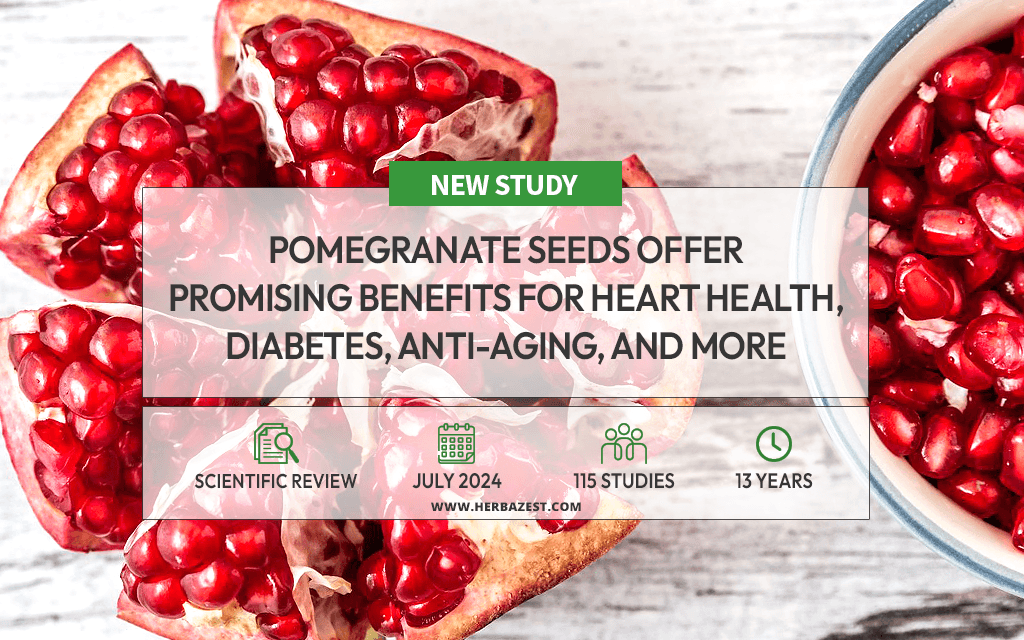
Often treated as a by-product of juice production, pomegranate seeds account for approximately 20% of the fruit's total weight.1 While they've long held value in various traditional medicine systems, modern applications have remained limited. However, a growing body of scientific research is now revealing the significant pharmacological potential of these overlooked seeds. Rich in bioactive compounds, including essential fatty acids, phenolic compounds, and antioxidants, pomegranate seeds may offer a compelling opportunity for both preventive health and therapeutic innovation.
The Study
Chinese researchers conducted a comprehensive review to consolidate current knowledge on pomegranate seeds. Drawing from 115 published studies, they examined the seeds' chemical composition, traditional uses, and pharmacological activities. The goal was to establish a scientific foundation for the pomegranate seeds' therapeutic potential and applications in the al, and wellness industries.
The Results
The review revealed that pomegranate seeds are rich in compounds known to support the body's natural defenses and cellular health.
One of the most notable is punicic acid, a unique fatty acid that has demonstrated the ability to influence abnormal cell growth and promote balance in metabolic functions. Research indicates its potential in maintaining healthy cell cycles and supporting the body's ability to manage oxidative stress.
Additional compounds, such as ellagic acid, tocopherols, sterols, and proteins, further enhance the seeds' functional value, contributing to their ability to support cardiovascular health, strengthen bone density, and combat oxidative stress.
Moreover, advanced delivery methods, such as nanoemulsions, were shown to significantly improve the bioavailability of these compounds, pointing to new frontiers in plant-based therapeutic formulations.
Studies also noted improvements in memory and cognitive function, wound healing, and skin health, underscoring the wide-ranging applications of pomegranate seed extracts.
What Does this Mean?
These findings reinforce the idea that pomegranate seeds, often discarded in industrial processing, are far more than agricultural waste.
For health-conscious consumers, this opens the door to natural options for managing inflammation, metabolic disorders, and even age-related decline. For product developers and researchers, the seeds offer a sustainable, versatile ingredient for nutraceuticals, pharmaceuticals, cosmetics, and other industries.
Other plant-based ingredients such as flaxseed, chia, and amaranth also demonstrate similar properties, offering complementary benefits for those seeking natural approaches to wellness.
Sources
- Frontiers in Pharmacology, Pomegranate seeds: a comprehensive review of traditional uses, chemical composition, and pharmacological properties, 2024
Footnotes:
- Hort Science. (2011). Characterization of Attributes Related to Fruit Size in Pomegranate. Retrieved March 28, 2025, from https://journals.ashs.org/view/journals/hortsci/46/6/article-p908.xml